
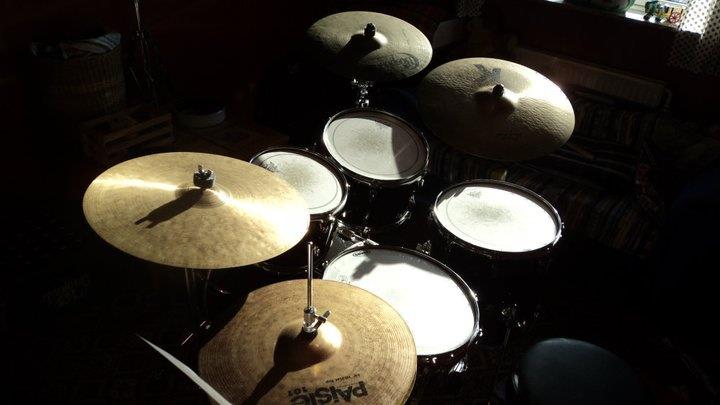
There’s plenty of research emerging on the benefits of drumming—brain scans, chemistry, trauma recovery studies. But long before I read any of that, I knew this:
If I didn’t drum for a while, I started to fray.
What the science says:
Drumming activates multiple regions of the brain at once. Focus, coordination, memory, timing, and emotion all light up together. This stimulates neuroplasticity—the brain’s ability to rewire and strengthen itself over time.
-
Myelin sheaths thicken (that’s the insulation on your neural wires)
-
Synaptic connections get stronger
-
Movement and rhythm literally shape brain architecture
In short, rhythm makes new pathways. And those pathways make new possibilities.
What the body says:
Drumming is deeply physical.
The motion itself slows the breath, steadies the nervous system, and creates a relaxation response in both body and brain.
Focused rhythm reduces mental noise.
The hands know what to do before the thoughts catch up.
What the practice offers:
-
Reduced anxiety, tension, and overwhelm
-
Natural release of aggression without collapse or explosion
-
Help with ADHD, PTSD, trauma recovery, and addiction support
-
Increased social connection, endorphins, and engagement
Group drumming, in particular, creates a shared beat.
Which often becomes a shared sense of belonging.
This is more than a hobby. It’s a healing practice.
And anyone can do it.
Pick up a drum.
Or your hands.
Or anything that can carry a rhythm.
Then play something simple—and let your brain catch up to the feeling.
If you’d like to explore rhythm not just as performance, but as practice, I offer one-to-one rhythm sessions to help reconnect with your body, breath, and attention.
Learn more →